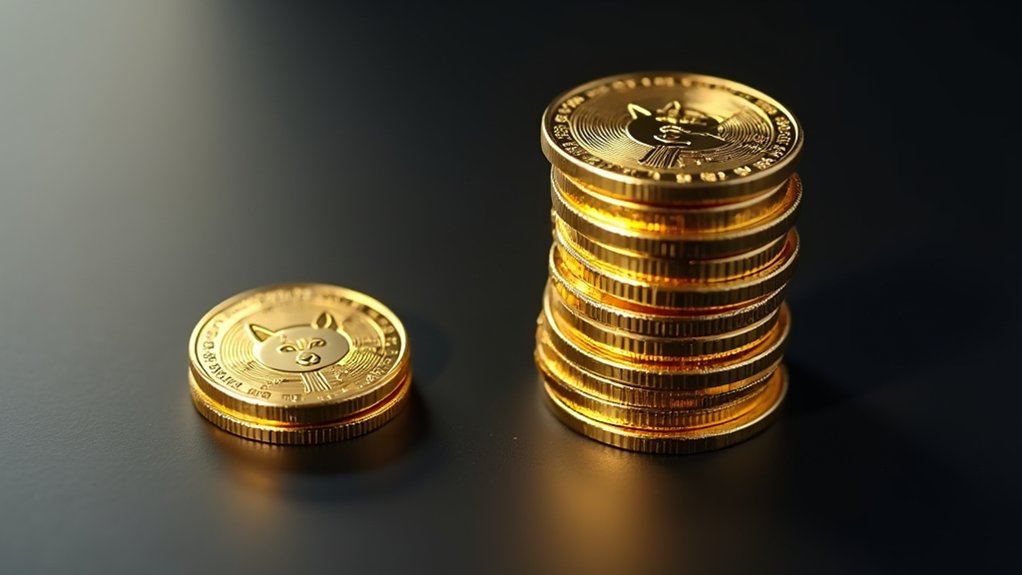
How does one reconcile the meteoric rise of meme coins—surpassing a staggering $60 billion market capitalization by mid-2025—with their notorious lack of intrinsic utility beyond fleeting social media frenzy? The answer lies partially in a toxic cocktail of hype-driven momentum and viral marketing, amplified by NFT collaborations that, despite their glossy veneer, often serve as little more than thinly veiled attempts to inject artificial value. These collaborations, touted as innovation, frequently mask the sector’s endemic problem: a chronic absence of sustainable utility. Meanwhile, regulatory challenges loom like an impending storm, threatening to dismantle the fragile edifice propped up by influencer tweets and FOMO-fueled speculation. The lack of clear regulatory frameworks only adds to the chaos, allowing a flood of over 65,000 new meme tokens daily—mostly on Solana—to saturate the market with ephemeral, often worthless projects. This surge is powered by platforms such as pump.fun and Base Meme Tools that enable zero-barrier token launches. Notably, the overall meme coin market cap has recently increased by 3%, reflecting a growing interest despite these challenges.
Trading volumes for meme coins routinely outpace those of more “serious” crypto ventures, underlining a disturbingly speculative ecosystem where cultural relevance and social media clout overshadow fundamental value. This is not a market driven by technological breakthroughs but by viral memes and community enthusiasm that, while impressive in scale, lack the hard backbone of genuine utility. Even attempts to imbue meme coins with utility—through AI-powered bots, DeFi integrations, or metaverse ambitions—remain sporadic, inconsistent, and insufficient to justify valuations ballooning into the tens of billions. Such speculative enthusiasm contrasts sharply with the more stable and collective approach seen in mining pools, which focus on network security and reward distribution through collaborative effort.
In this context, Dogecoin, PENGU, Bonk, and Fartcoin do not merely represent cryptocurrencies; they epitomize a cultural phenomenon where hype trumps substance, regulatory oversight lags dangerously behind innovation, and the line between fleeting meme and financial asset grows ever more blurred. The question ceases to be if this bubble will burst, but when, and at what cost to the credulous investors caught in its wake.