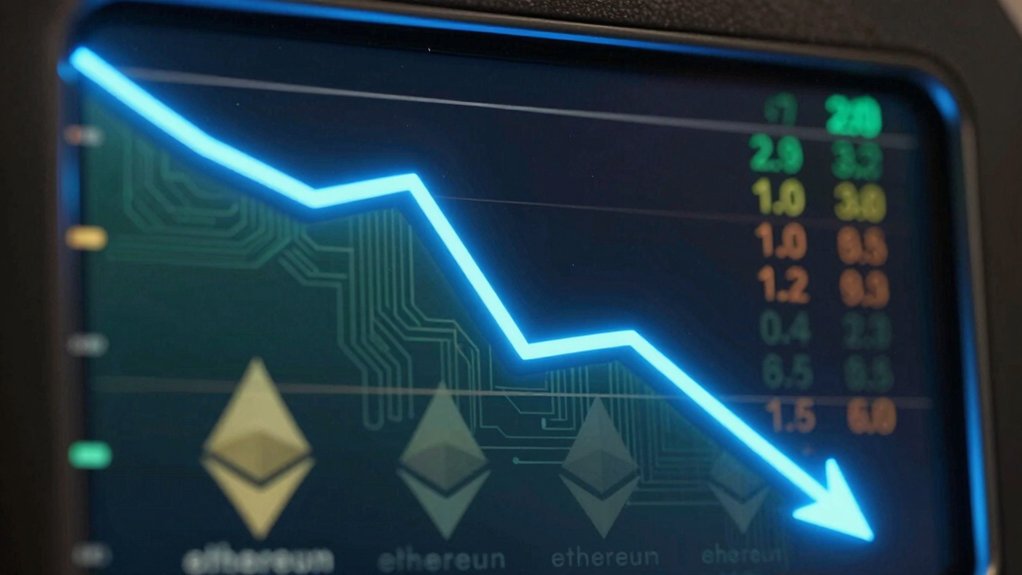
How have Ethereum gas fees evolved in recent years amid protocol upgrades and shifting network dynamics? Since the implementation of the Dencun upgrade in March 2024, Ethereum gas fees have undergone a substantial transformation, evidenced by a precipitous 95% decline in average gas fees, driving levels from a pre-upgrade norm of approximately 72 gwei down to a mere 2.7 gwei by October 2025. This marked reduction not only interrupts the historical trend of fee escalations characteristic of earlier blockchain congestion episodes but also ignites renewed scrutiny concerning mining incentives and the overarching tokenomics debate. The considerable attenuation of fee-derived revenues, reflected in mainnet earnings hovering below 300 ETH daily—a nadir unseen since 2017—provokes critical reassessments regarding validator compensation models, as reduced transaction fees drastically undercut the once robust economic underpinnings of Ethereum’s consensus layer. Moreover, the decrease in fees has resulted in sustained periods during which gas prices remain below 0.2 gwei, a threshold unseen in Ethereum’s history until this upgrade introduced record low gas prices. This decline is driven in part by the Layer 2 networks now handling over 1.9 million daily transactions, which offload much of the mainnet’s transactional burden. These scaling solutions rely heavily on the Ethereum Virtual Machine to ensure seamless and secure execution of smart contracts off-chain.
Correspondingly, protocol enhancements such as the expansion of the block gas limit to 37.3 million in mid-2025, alongside sustained adoption of the EIP-1559 base fee mechanism, contribute synergistically to the suppression of transaction costs, which now average approximately $0.38 per transaction, with simple swaps registering even lower transactional outlays near $0.39. Intriguingly, while the post-Merge event in 2022 failed to elicit immediate fee alleviations, the subsequent Layer 2 scaling solutions have redirected over 94% of transactional throughput off the mainnet, thus substantially diminishing congestion and facilitating fee compressions. This infrastructural evolution underscores the complexities of balancing network accessibility with sustainable revenue streams, intensifying discourse on how mining incentives must adapt within evolving tokenomics frameworks.
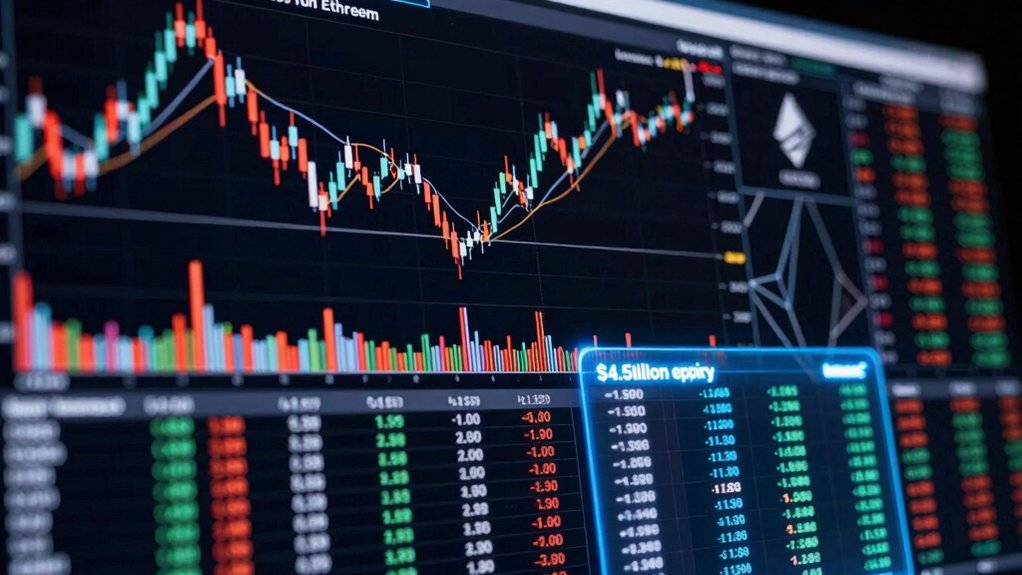
Moreover, the interplay between sustained fee reductions and increasing network activity—manifest in daily transaction volumes ascending from 1.1 million in early 2025 to peaks exceeding 1.6 million by October—introduces cyclical volatility in fee structures, primarily governed by base fee algorithms calibrated for 50% block utilization, and impacted by sporadic NFT-driven surges. Consequently, the economic implications extend beyond merely reduced costs, challenging Ethereum’s capacity to maintain validator incentives while privileging Layer 2 scalability solutions, thereby charting a nuanced trajectory in the ongoing evolution of decentralized finance infrastructure.